



Sicilian Cassata: A Historic Dessert with a Step-by-Step Recipe
- Details
- Hits: 105

Introduction: The Sweet Artwork of Sicily
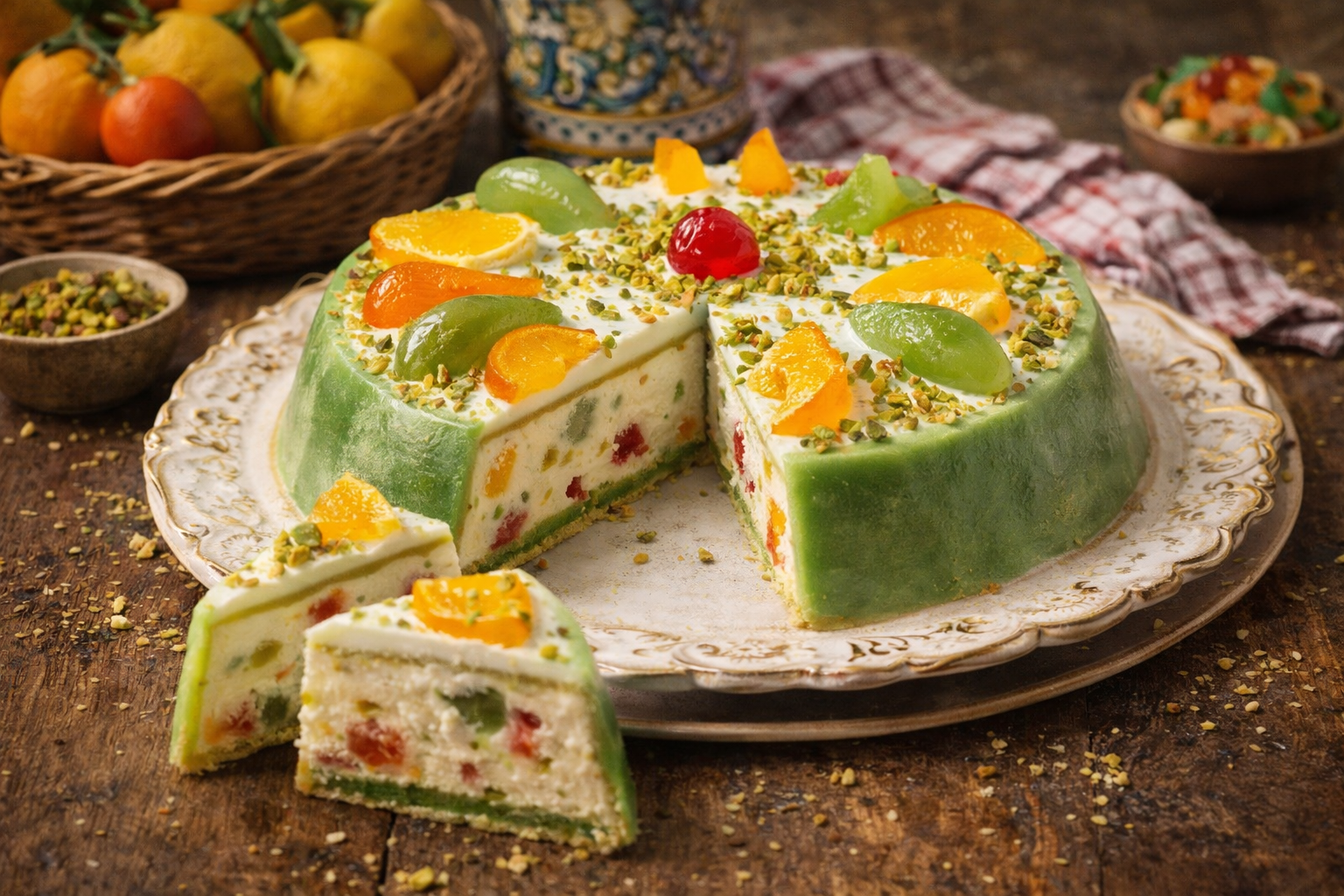
Cassata Siciliana is not simply a dessert: it is a symbol, a hymn to joy and baroque sumptuousness translated into pastry.
A symbol of the Sicilian dolce vita, it's a must-have during the Easter holidays, but now celebrated on every important occasion. Its exuberant decoration of colorful candied fruit against a white icing evokes the island's lush gardens and sunshine, embodying centuries of history, cultural influences, and unique artisanal savoir-faire.
History and Tradition: A Millennium of Layering Flavors
Cassata's roots lie in Sicilian Arabism (9th-11th centuries). It was the Arabs who introduced sugar cane, lemon, citron, bitter orange, and almonds, creating its first ancestor: a round cake made with sheep's ricotta sweetened with honey and wrapped in a shortcrust pastry, baked in the oven. The name probably derives from the Arabic qas'at , "bowl," or the Latin caseum , "cheese."
The transformation into a cold, decorated cassata occurred in the Baroque era, when Palermo's monasteries perfected marzipan (martorana) and the art of candying fruit. In the 18th century, the introduction of sponge cake and chocolate completed the process, while the 19th century saw the emergence of the characteristic white icing and lavish toppings. Today, it is a Slow Food Presidium and a treasure of tradition.
Production: Traditional vs. Modern Methods
Traditional production is a slow, manual ritual:
-
Ricotta : it must be made from sheep's milk, drained and sifted, mixed with sugar and chocolate chips.
-
The casing : the walls of a round mold are lined with very thin slices of sponge cake moistened with liqueur (often Marsala or Maraschino).
-
The filling : fill the mold with ricotta cream.
-
The Closure : cover with another disc of sponge cake.
-
The Decoration : after pressing for a few hours, it is unmolded, glazed with icing sugar and egg white (or fondant) and decorated with geometric marzipan motifs and a riot of candied fruit (squash, orange, cherries, pears, orange peel).
The modern method sometimes uses springform pans, cow's milk ricotta (less flavorful), industrial sponge cake, and artificial colorings for the candied fruit, speeding up the process but diminishing its character and organoleptic complexity.
How to Recognize Quality
-
Label/Origin : Prefer Sicilian artisan producers, preferably with a geographical indication or Slow Food Presidium.
-
Appearance : Harmonious decoration, not overly chemical in its colors. The icing should be white and smooth, not chalky.
-
Candied Fruit : They must be whole or thick pieces, with natural colors (tending to opaque), and a clear fruit flavor and not just sugar.
-
Royal Pastry : It must be soft, with an almond flavour, not too sweet.
-
Ricotta : When tasted, it should be grainy but fine, well sweetened, with a typical sheep's aftertaste, never acidic or watery.
-
Sponge cake : It must be moist enough, soaked but not soggy, and maintain its structure.
Uses in the Kitchen: From Tradition to Creativity
Cassata is traditionally served in slices, as the final touch to a meal. Modern creative variations reinterpret it as:
-
Single portions ( mini-cassatine ).
-
Ricotta parfait inspired by cassata.
-
Cakes that reflect the combinations (ricotta, sponge cake, candied fruit).
-
Basì for dessert: deconstructed with ricotta cream, cubes of sponge cake with liqueur, almond ice cream and chocolate chips.
-
Cassata-flavored spreadable cream .
Recommended Pairings with Sicilian Products
-
Sweet Wines : A Passito di Pantelleria (Moscato), a Malvasia delle Lipari, or a Moscato di Siracusa. The ideal pairing is a Marsala Superiore Dolce , its historic companion.
-
Spirits : A sip of Amara Averna or Limoncello di Sicilia after dessert to cleanse the palate.
-
Coffee : A dense and aromatic Sicilian espresso .
-
Other Desserts : Can be part of a dessert tour with a mandarin granita and a cannolo (served separately!).
Proper Storage
Cassata should be stored in the refrigerator at +4°C, covered with plastic wrap or in its mold, for a maximum of 3-4 days . Ricotta is a fresh and perishable product. It can be frozen, but this risks altering the consistency of the sponge cake and ricotta. The icing tends to cloud when exposed to humidity. Serve slightly chilled , removing it from the refrigerator 15-20 minutes before serving.
Curiosities and Regional Differences
-
Palermo vs. Catania : In Palermo, the decoration is lavish, with whole candied fruit. In Catania (and the Syracuse area), apricot jam is often used instead of the white icing, and the decoration is more subtle.
-
Baked Cassata : In Agrigento and Trapani, the original “baked” version still exists, with shortcrust pastry and cooked ricotta, without icing or candied fruit.
-
“Timpano della Cassata” : In Messina it is sometimes served in the shape of a “timpano”, taller and more compact.
-
Historical Curiosity : In 1574, the Synod of Bishops of Mazara del Vallo attempted to prohibit its consumption during Easter celebrations because it was “excessively luxurious” for the palate.
-
Celebration : On November 2nd, All Souls' Day, in Sicily it is customary to give children sweets such as cassatella (small cassata) along with frutta martorana.
In conclusion , tasting a true Sicilian Cassata is a sensory journey into the history and soul of the island: each layer tells the story of a domination, each ingredient celebrates the generosity of its land. A dessert that is much more than a recipe: it's a celebration.
Cosa ne pensi?
Inviaci un feedback!

 And then Add to Home Screen.